
The 8 Best AI Image Generators in 2026
Discover the 8 best AI image generators in 2026. Compare AI image tools for art, marketing, e-commerce, design, and commercial use, with real strengths, use cases, and expert insights.
AI image generators have become one of the most impactful creative technologies of the past decade. In 2026, they are no longer experimental tools limited to tech enthusiasts or digital artists — they are now widely adopted by designers, marketers, e-commerce sellers, game developers, content creators, and businesses of all sizes.
What started as simple text-to-image experiments has evolved into powerful AI systems capable of generating photorealistic images, detailed illustrations, product photos, advertisements, social media visuals, and concept art in seconds. As a result, search interest for terms like AI image generator, best AI image generator, AI art generator, and text to image AI has continued to grow rapidly year over year.
In 2026, the landscape of AI image generation is more competitive and sophisticated than ever. New models offer better prompt understanding, higher image resolution, stronger style consistency, and improved support for commercial use. Many platforms now focus on practical workflows such as marketing creatives, e-commerce product images, branding assets, and content production, rather than purely artistic experimentation.
However, with dozens of AI image generators available — each claiming to be the best — choosing the right tool has become increasingly confusing. Some platforms excel at artistic and cinematic visuals, while others prioritize prompt accuracy, customization, typography, or business-ready outputs. The “best” AI image generator often depends on your specific use case.
This guide to The 8 Best AI Image Generators in 2026 is designed to help you make an informed decision. Instead of ranking tools based on hype, we focus on real-world strengths: what each AI image generator does best, who it’s ideal for, and how it fits into modern creative and commercial workflows.
Whether you’re looking for an AI image generator for marketing, an AI art tool for creative exploration, or a text-to-image platform for professional design and commercial use, this article will give you a clear, up-to-date overview of the best options available in 2026 — and what to expect next as the technology continues to evolve.
A Brief History of AI Image Generation
AI image generation has evolved rapidly over the past two decades, driven by advances in machine learning and computer vision. Early systems relied on rule-based graphics and simple algorithms, producing only basic shapes or procedural visuals with no real understanding of images.
The first major breakthrough came with neural networks, which allowed machines to analyze visual patterns such as edges, textures, and objects. While these models focused on image recognition rather than creation, they laid the foundation for modern AI image generators.
A turning point arrived with Generative Adversarial Networks (GANs). GANs enabled AI to generate realistic faces, artwork, and scenes for the first time, making AI-generated images popular in digital art and experimentation. However, GAN-based models were difficult to control and lacked accurate text-to-image capabilities.
The most significant leap came with diffusion models, which now power most leading AI image generators in 2026. Diffusion-based text-to-image AI systems generate images step by step from noise, guided by natural language prompts. This approach dramatically improved image quality, realism, and prompt accuracy.
By 2026, AI image generation has shifted from experimental art to commercial-ready tools used for marketing, product photography, social media, and design. Modern AI image generators focus on speed, consistency, and usability, making AI image creation an essential part of today’s creative workflows.
Best AI Image Generators in 2026 (Quick Overview)
| AI Image Generator | Biggest Strength | Best For | Ease of Use | Commercial Use |
|---|---|---|---|---|
| Midjourney | Best artistic & cinematic image quality | Artists, illustrators | Medium | Yes |
| DALL·E | Best prompt accuracy & concept clarity | Concepts, illustrations | Easy | Yes |
| Stable Diffusion | Best customization & control | Advanced users | Hard | Yes |
| Createimg.ai | Best all-in-one commercial image creation | Marketing, ads, product photos | Easy | Yes |
| Nano Banana Pro | Best real-world contextual visuals & infographic generation | Knowledge visuals, infographics, professional layout | Medium | Yes |
| Leonardo AI | Best for game assets & concept design | Game designers | Medium | Yes |
| Adobe Firefly | Best for brand-safe & licensed content | Design teams | Easy | Yes |
| Ideogram | Best for generating readable text inside images | Posters, social graphics | Easy | Yes |
The Best AI Image Generators by Strength (2026)
Midjourney
Best AI image generator for artistic and cinematic visuals
Midjourney continues to be widely recognized as the best AI image generator for artistic expression in 2026. It is especially known for producing highly stylized, cinematic, and emotionally rich images that often resemble professional concept art or digital paintings.
Unlike many AI image generators that prioritize realism or utility, Midjourney focuses on aesthetic quality and visual impact. Its model excels at lighting, color harmony, composition, and dramatic atmosphere, making it a top choice for artists, illustrators, and creative directors. Many users rely on Midjourney for album covers, editorial artwork, fantasy scenes, and cinematic illustrations.
Another strength of Midjourney is style consistency. Once a visual direction is established, it can generate a coherent series of images with a similar artistic language, which is valuable for storytelling and brand visuals. However, it offers limited control for technical workflows such as precise layouts, typography, or product accuracy.
Overall, Midjourney remains the best AI art generator for users who value creativity over strict realism or commercial constraints.
DALL·E
Best AI image generator for prompt accuracy and idea visualization
DALL·E stands out in 2025 as one of the most accurate text-to-image AI models available. Its biggest strength lies in understanding detailed prompts and translating them into clear, structured images with minimal ambiguity.
Compared to more artistic tools, DALL·E is particularly effective for concept visualization, educational illustrations, diagrams, and clean digital artwork. Users often choose it when they need an image that closely follows written instructions rather than abstract interpretation. This makes it popular among marketers, educators, and product teams who prioritize clarity and correctness.
DALL·E also performs well in generating objects, scenes, and characters that match real-world descriptions. While its artistic style may feel more restrained than Midjourney, its outputs are generally well-balanced and easy to reuse across websites, presentations, and documents.
For users searching for a reliable AI image generator that “does what the prompt says”, DALL·E remains one of the safest and most consistent choices in 2026.
Stable Diffusion
Best AI image generator for customization and advanced control
Stable Diffusion is widely considered the most flexible and customizable AI image generator in 2025. As an open-source model, it allows users to fine-tune nearly every aspect of the image generation process, from model weights to output style.
One of Stable Diffusion’s key advantages is its extensive ecosystem. Users can install custom checkpoints, LoRAs, ControlNet extensions, and community-trained models to achieve very specific visual results. This makes it a favorite among developers, AI researchers, and advanced creators who need full creative control.
Stable Diffusion is also commonly used for character consistency, product mockups, and workflow automation, especially in self-hosted environments. However, its power comes with complexity. Beginners may find the setup process and learning curve challenging compared to cloud-based tools.
For users who want a professional-grade AI image generator with unlimited customization, Stable Diffusion remains unmatched.
Createimg.ai
Best all-in-one AI image generator for commercial and marketing use
Createimg.ai is designed specifically for users who need practical, commercial-ready AI images, rather than experimental artwork. In 2025, it stands out as a platform that combines multiple leading AI image models into a single, streamlined workflow.
Its strongest advantage is versatility. Users can generate product photos, lifestyle scenes, marketing banners, social media images, and ad creatives without switching between different tools. The platform focuses on speed, consistency, and usability, which makes it especially attractive for e-commerce sellers, marketers, and content teams.
Unlike many standalone AI art tools, Createimg.ai emphasizes real-world output quality, ensuring images are suitable for websites, ads, and commercial campaigns. The interface is beginner-friendly, while still offering enough control for professional use.
For businesses looking for a reliable AI image generator for commercial use, Createimg.ai is one of the most balanced solutions available in 2026.
Leonardo AI
Best AI image generator for game assets and concept design
Leonardo AI has established itself as a strong choice for game developers, concept artists, and creative studios. Its tools are optimized for generating characters, environments, and visual assets used in interactive media. The platform offers fine-grained control over styles and iterations, making it easier to refine assets for production pipelines. Many users rely on Leonardo AI to create consistent character designs and environment concepts, which are critical in game development and animation.
While Leonardo AI is less focused on marketing or product imagery, it excels in creative production workflows where visual iteration and asset coherence matter most.
Adobe Firefly
Best AI image generator for brand-safe and licensed content
Adobe Firefly is built for professional designers who prioritize copyright safety and commercial licensing. Integrated directly into the Adobe Creative Cloud ecosystem, it fits seamlessly into existing design workflows.
Firefly is particularly suitable for corporate branding, marketing materials, and enterprise-level projects where legal clarity is essential. While its creative freedom may feel more controlled than open models, its outputs are predictable, clean, and safe for commercial distribution.
For teams that already use Photoshop or Illustrator, Firefly is one of the most practical AI image generators for professional design work.
Ideogram
Best AI image generator for readable text and typography
Ideogram specializes in an area where many AI image generators still struggle: accurate text rendering inside images. It performs particularly well for posters, logos, signage, and social media graphics that include visible text.
This makes Ideogram highly valuable for creators who need AI-generated images with legible words, such as promotional banners or typographic designs. While its artistic range is narrower, its reliability with text sets it apart.
Nano Banana Pro
Best AI image generator for design consistency and multi-image reference control
Nano Banana Pro is widely recognized in 2026 as one of the best AI image generators for maintaining visual consistency across multiple images. Unlike many AI art generators that excel at single-image creativity, Nano Banana Pro is specifically optimized for workflows that require repeatable characters, stable styles, and consistent visual identity.
One of its strongest advantages is advanced multi-image reference support. Users can upload several reference images and guide the AI to preserve key visual elements such as facial structure, color palette, clothing style, or product shape across different generations. This makes Nano Banana Pro especially valuable for branding, character-driven content, and serialized visual production.
Nano Banana Pro is frequently used for product mockups, character packs, marketing campaigns, and UI-style visuals, where consistency matters more than experimental art. Its prompt system allows precise control over composition and structure, reducing randomness and improving predictability — a critical factor for commercial and professional use.
While it may not focus on painterly or abstract art like some creative-first tools, Nano Banana Pro excels as a professional AI image generator for controlled, repeatable results. For creators and teams who need scalable visual production without sacrificing coherence, Nano Banana Pro stands out as a powerful and reliable solution in 2026.
Other AI Image Generators Worth Trying
Over the past year, the overall quality of AI image generators has improved significantly. Today, there are more than a dozen models capable of producing high-quality results, many of which are close in performance.
While the eight tools above represent the best choices for most users, several other AI image generators are still worth mentioning for specific use cases or audiences.
Getty Images:Getty’s generative AI focuses on producing commercially safe images with clear licensing. The image quality is solid, and it’s a good option for organizations that require zero legal risk—although in practice, many creators still use tools like Midjourney or Ideogram without issue. Luma AI:Luma Photon is another strong image model, particularly known for its visual quality. However, its Dream Machine application feels more experimental and unconventional, which may not appeal to all users. Playground AI:Playground is well suited for graphic design and layout-driven visuals. That said, its heavy reliance on templates places it slightly outside the scope of pure image-generation tools, which is why it didn’t make the main list.
Expected Breakthroughs in AI Image Generators in 2026
At the start of 2026, AI image generators are shifting from rapid experimentation to practical refinement. The most likely breakthroughs this year will focus on consistency, usability, and commercial reliability, rather than radical visual changes.
Improved image consistency is expected within single projects or sessions, allowing creators to maintain the same characters, products, and visual styles across multiple images. This is driven by growing demand from branding, marketing, and product photography use cases, where visual coherence is essential.
More accurate text rendering and layout control should also become more reliable in 2026. As AI-generated posters, ads, and social graphics become more common, platforms are prioritizing readable text and structured compositions that deliver immediate commercial value.
Another key trend will be more efficient commercial workflows, including batch generation, reusable prompts, and faster iteration. Businesses require repeatable results, and AI image generators are increasingly designed around productivity rather than experimentation.
Finally, faster generation speeds and lower costs are expected as model optimization and infrastructure efficiency improve, making AI image generators more accessible to small teams and businesses.
Overall, 2026 will likely be a year of steady, practical improvement — turning AI image generators into dependable tools for everyday creative work.
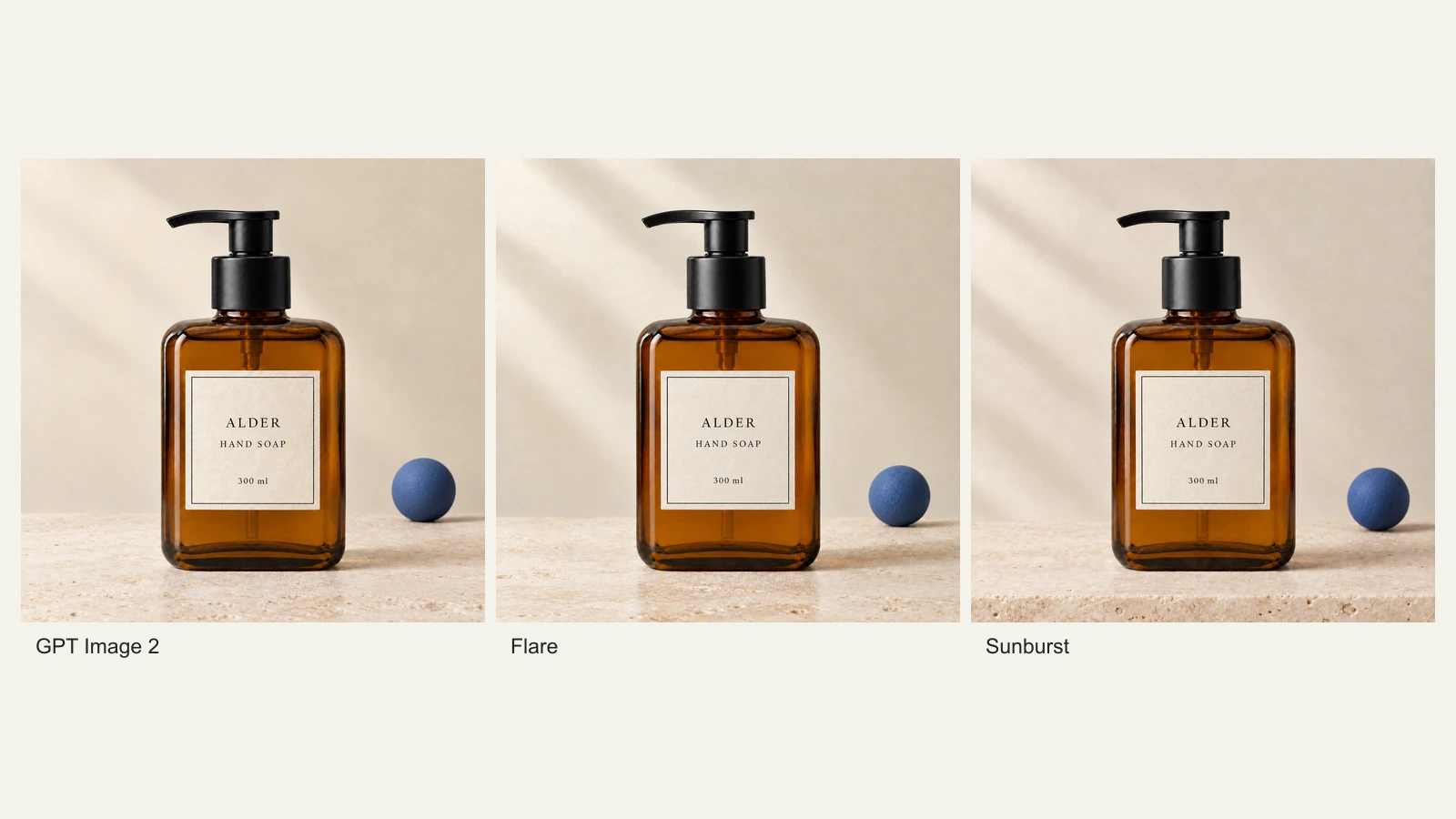
GPT Image 2.5 Flare vs Sunburst: Product Photo Edits Tested
We compare Flare, Sunburst and GPT Image 2 across 18 product-photo edits: label fidelity, material changes, editing speed and current site credits.
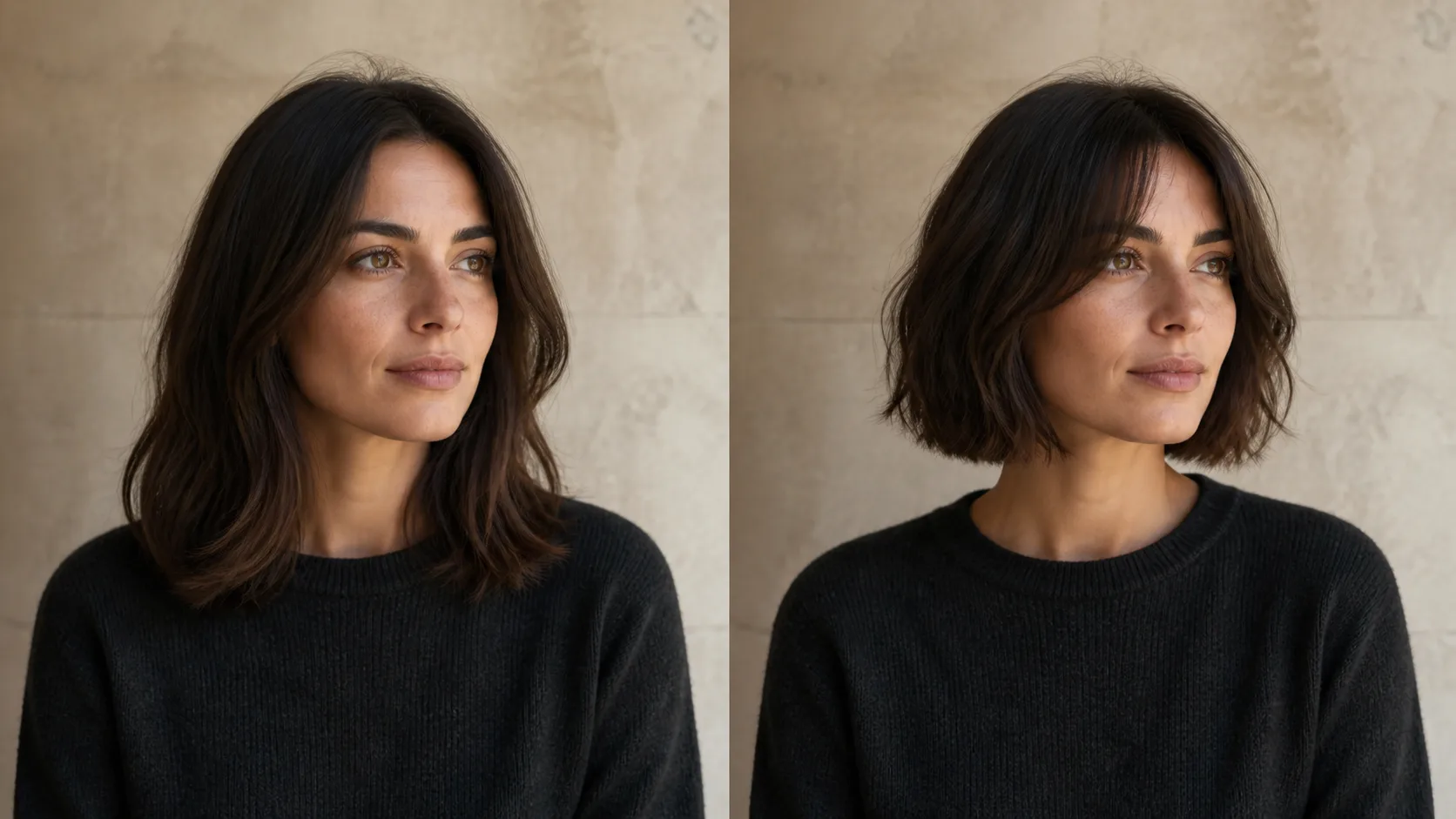
How to Preview a Haircut With AI Before You Commit
Learn how to preview a haircut with AI using better photos, precise prompts, reference images, and a realism check before visiting the salon.